




Civil Engineering
Undergraduate program · Civil Engineer
Modality
In-person
Duration
4 years
Campus
Samborondón
Request information
An admissions advisor will contact you to answer your questions about Civil Engineering.
About the program
Study Civil Engineering at ECOTEC
The Civil Engineering program prepares well-rounded professionals capable of designing, planning, managing, executing, and controlling civil works projects on a small, medium, and large scale, with environmental awareness and a commitment to sustainability in professional practice.
Degree awarded
Civil Engineer
CES Resolution: RPC-SO-07-No.103-2025

Graduate profile
What you will be able to do
When you graduate from Civil Engineering, you will have developed these professional competencies.
Carry out processes of analysis and interpretation of information in diverse contexts, promoting the evaluation of data to issue well-grounded judgments, maintaining a reflective and respectful approach toward different viewpoints with the purpose of contributing effective solutions to complex problems.
Effectively lead work teams, assume commitments that contribute to the improvement and development of an organization, and promote collaborative leadership to strengthen cohesion and the achievement of common goals, with an ethical and responsible attitude in joint decision-making for conflict resolution.
Generate original ideas in diverse contexts, encourage the association of concepts and the identification of relationships among factors to address challenges innovatively, and maintain an open and flexible attitude toward change with a critical focus on the implementation of original and creative solutions.
Develop a logical and structured sequence of research processes autonomously and creatively, to generate new knowledge and apply and strengthen existing knowledge, collect and analyze data clearly and coherently, and maintain a critical and ethical focus at all stages of the research process.
Develop structural analysis skills to execute, interpret, and evaluate plans, calculations, and designs for infrastructure, superstructure, and mobility based on empirical data and/or theories; promote the technical evaluation of data, standards and the issuing of well-founded criteria; maintain an honest, reflective, and respectful attitude toward different constructive approaches; and minimize environmental impact.
Carry out the management, planning, organization, and/or evaluation of construction projects following the guidelines of PMI methodology to ensure safe execution based on an environment-friendly approach, maintaining a respectful attitude and promoting ethics in the implementation of original and creative solutions.
Lead civil engineering solutions in response to challenges in existing structures to ensure the safety, stability, and sustainability of infrastructure, superstructures, and mobility systems; promote the integration of technical concepts; and maintain an open and flexible attitude toward continuous improvement.
Consider sustainable design solutions that integrate ethical principles and social responsibility for environmental care, based on minimizing the resources that civil projects may require, promoting resource optimization and improving quality of life for people and other species.
Career opportunities
Where do Civil Engineering professionals work?
A civil engineer designs, plans, builds, and supervises works such as buildings, roads, bridges, and water systems. Studying Civil Engineering in Ecuador prepares you to take part in infrastructure and mobility projects of different scales in Guayaquil and the rest of the country, with a focus on structural safety, project management, and sustainability.
Structural Design
You calculate and design structures made of concrete, steel, or other materials, interpret plans, and verify that each element complies with current building codes.
Construction and Site Management
You direct on-site execution, coordinate crews and suppliers, monitor progress, materials, and quality, and look after the safety of personnel.
Project Management
You plan schedules, budgets, and risks for construction projects using methodologies such as PMI's, and track costs and deadlines.
Roads and Mobility
You take part in the design and maintenance of highways, intersections, and urban mobility solutions that improve traffic flow and road safety.
Assessment and Rehabilitation
You inspect existing structures, diagnose failures, and propose reinforcements or repairs that ensure their stability and extend their service life.
Construction Oversight and Consulting
You review designs, verify that the work is carried out as contracted, and advise public or private entities on technical infrastructure decisions.
Study plan
Curriculum and brochure
Download the complete study plan and program information in PDF.
Admissions
Admission requirements
Have these documents ready for your admission process. Your advisor will confirm whether your program requires any additional documents.

ID document
Color copy of your national ID card, or passport if you are an international student.

Academic record
Copy of your high school report card or academic record.

Current photo
Recent color digital photo with a light background.
Where to study
Campuses where Civil Engineering is offered
Why ECOTEC
Why study Civil Engineering at ECOTEC?

Degree recognized in Spain and the U.S.
Your undergraduate degree is recognized in Spain and the United States (conditions apply depending on the program).




International certifications
Complement your degree with certifications from Meta, Google, Microsoft, and IBM.


Recognized quality
ECOTEC is part of the QS World University Rankings and the Times Higher Education Latin America Rankings.



Three campuses
Study in Samborondón, Guayaquil, or La Costa, with modern classrooms, laboratories, and green areas.
Keep exploring
Other programs in the School of Engineering, Architecture, and Natural Sciences
Compare study plans and find the program that suits you best.

Agronomy

Architecture
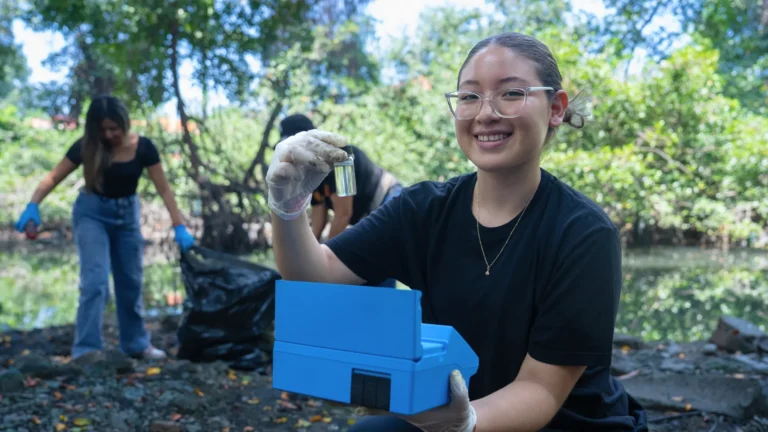
Environmental Engineering
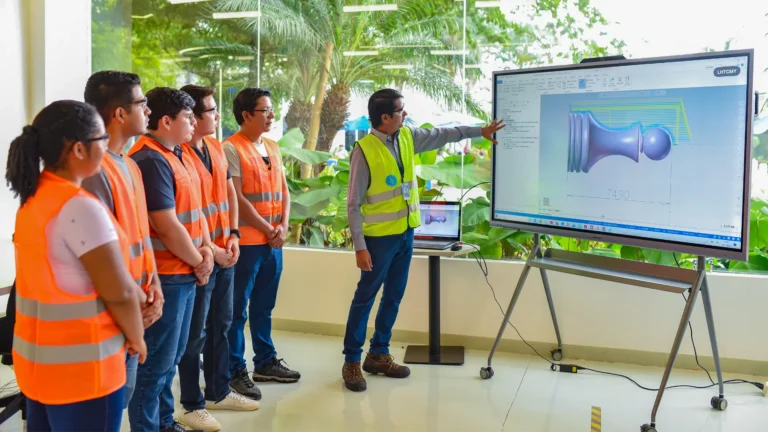
Industrial Engineering

Intelligent Systems Engineering

Mechatronics Engineering
FAQ
Most frequently asked questions about Civil Engineering
Have another question? An admissions advisor will answer with no obligation.
What does a civil engineer do?
They design and calculate structures, plan construction projects, direct works, and verify that everything complies with technical and safety standards. They also assess existing structures and propose solutions when they show failures. They can work in an office, using design software, or in the field, coordinating teams on site; many professionals combine both.
How long is the Civil Engineering program at ECOTEC?
The Civil Engineering program at ECOTEC University lasts 4 years and is taught in person. The curriculum is organized by semesters, and you can review it in full in the study plan available on this page.
What degree will I earn by studying Civil Engineering?
When you graduate, you earn the professional degree of Civil Engineer. The program is approved by the Council of Higher Education (CES) under resolution RPC-SO-07-No.103-2025, and your degree is registered with SENESCYT, giving it official validity in Ecuador.
Which campus can I study Civil Engineering at?
Civil Engineering is offered at the Samborondón Campus (Vía Samborondón, km 13.5). That is where you will attend classes, do your practical training, and receive admissions support.
What is the difference between Civil Engineering and Architecture?
Architecture focuses on the design of spaces: their function, their aesthetics, and how people experience them. Civil Engineering makes sure the work is safe and feasible: it calculates structures, foundations, and building systems, and manages construction. Civil engineering also covers works that are not buildings, such as roads, bridges, or water systems.
What are the requirements to study Civil Engineering at ECOTEC?
To begin your admission to Civil Engineering, you need your ID document (Ecuadorian ID card or passport), your high school academic record or report card, and a recent photograph. An admissions advisor will confirm whether any additional documents are needed and will guide you throughout the process.
Do I need to be good at math to study Civil Engineering in Ecuador?
Yes, math and physics are the foundation of the program: you will use them in structural calculations, hydraulics, surveying, and budgeting. You don't need to have mastered them when you start, but you do need a willingness to study them consistently. If you enjoy solving problems and understanding why something stays standing, you are already well on your way.
Admissions open
Start your Civil Engineering degree today
An advisor will guide you through the entire admission, scholarship, and cost process.