




Intelligent Systems Engineering
Undergraduate program · Intelligent Systems Engineer
Modality
In-person
Duration
4 years
Campus
Samborondón, Guayaquil
Request information
An admissions advisor will contact you to answer your questions about Intelligent Systems Engineering.
About the program
Study Intelligent Systems Engineering at ECOTEC
The Intelligent Systems Engineering program prepares well-rounded professionals capable of managing the development and implementation of intelligent systems through problem-based learning and research for the design, implementation, and administration of computer systems within organizations.
Degree awarded
Intelligent Systems Engineer
CES Resolution: RPC-SO-09-No.134-2025

Graduate profile
What you will be able to do
When you graduate from Intelligent Systems Engineering, you will have developed these professional competencies.
Carry out processes of analysis and interpretation of information in diverse contexts, promoting the assessment of data to make well-founded judgments, while maintaining a reflective and respectful approach toward different viewpoints for the purpose of contributing effective solutions to complex problems.
Effectively lead work teams, assuming commitments that contribute to the improvement and development of an organization, promoting collaborative leadership to strengthen cohesion and achieve common objectives, with an ethical and responsible attitude in joint decision-making for conflict resolution.
Generate original ideas in diverse contexts, promoting the association of concepts and the identification of relationships among factors to address challenges innovatively, while maintaining an open and flexible attitude toward change with a critical approach to implementing original and creative solutions.
Develop a logical and structured sequence of research processes autonomously and creatively to generate new knowledge and apply and strengthen existing knowledge, collecting and analyzing data clearly and coherently, while maintaining a critical and ethical approach throughout all stages of the research process.
Outline algorithms and solutions in different programming languages, applying principles of logic, creativity, and critical analysis to solve complex problems in the professional field and promote quality, efficiency, and ethics in software development.
Develop skills to plan, execute, and control innovation and management projects, committing to the development of innovative technological solutions that meet international standards of quality, sustainability, and social responsibility, in order to promote ethical values, collaboration, organizational competitiveness, and effective adaptation to the dynamic demands of the business environment.
Evaluate advanced techniques for the analysis and management of structured and unstructured data, integrating technological tools to generate strategic information, interpret results, and justify informed decisions that promote accuracy, responsibility, and a results-oriented approach.
Design reliable communication networks that guarantee information security and protection, applying advanced technological standards and promoting a culture of prevention, professional ethics, and proactive response to cyber risks.
Career opportunities
Where do Intelligent Systems Engineering professionals work?
An intelligent systems engineer designs, develops, and manages software and artificial intelligence solutions that automate processes and support data-driven decisions. If you study Intelligent Systems Engineering in Ecuador, you can work at technology companies, banks, retailers, industries, and public entities, or join remote teams of foreign companies from Guayaquil.
Software Development
Designs algorithms and programs web, mobile, and desktop applications in different languages, with attention to code quality, efficiency, and maintainability.
Artificial Intelligence
Trains and deploys models that classify, predict, or recognize patterns, such as recommendation systems, conversational assistants, or fraud detection tools.
Data Science and Analytics
Processes structured and unstructured data, builds analytical models and dashboards, and interprets results to generate strategic information for the organization.
Networks and Cybersecurity
Designs reliable communication networks, applies security standards, and responds to cyber risks to protect the organization's information.
Process Automation
Integrates systems and automates repetitive tasks with software, robotic process automation, or connected devices so operations are faster and more accurate.
Technology Project Management
Plans, executes, and controls technology innovation projects, coordinates development teams, and ensures that solutions meet quality standards.
Study plan
Curriculum and brochure
Download the complete study plan and program information in PDF.
Admissions
Admission requirements
Have these documents ready for your admission process. Your advisor will confirm whether your program requires any additional documents.

ID document
Color copy of your national ID card, or passport if you are an international student.

Academic record
Copy of your high school report card or academic record.

Current photo
Recent color digital photo with a light background.
Where to study
Campuses where Intelligent Systems Engineering is offered
Why ECOTEC
Why study Intelligent Systems Engineering at ECOTEC?

Degree recognized in Spain and the U.S.
Your undergraduate degree is recognized in Spain and the United States (conditions apply depending on the program).




International certifications
Complement your degree with certifications from Meta, Google, Microsoft, and IBM.


Recognized quality
ECOTEC is part of the QS World University Rankings and the Times Higher Education Latin America Rankings.



Three campuses
Study in Samborondón, Guayaquil, or La Costa, with modern classrooms, laboratories, and green areas.
Keep exploring
Other programs in the School of Engineering, Architecture, and Natural Sciences
Compare study plans and find the program that suits you best.

Agronomy

Architecture

Civil Engineering
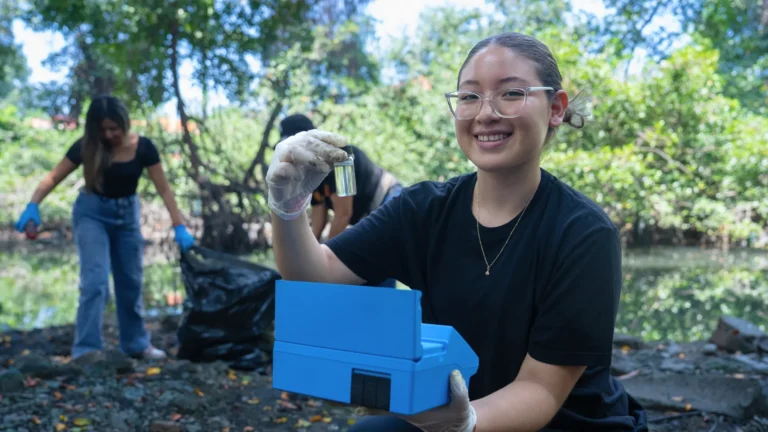
Environmental Engineering
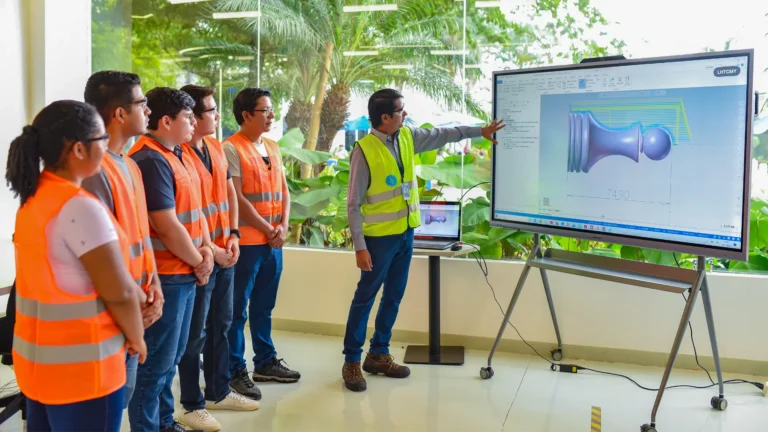
Industrial Engineering

Mechatronics Engineering
FAQ
Most frequently asked questions about Intelligent Systems Engineering
Have another question? An admissions advisor will answer with no obligation.
What is the difference between Intelligent Systems Engineering and Software Engineering?
A Software or Computer Science program focuses on building and maintaining programs and systems. Intelligent Systems Engineering shares that programming foundation but focuses on artificial intelligence, data analysis, and automation, as well as networks and cybersecurity. You learn to develop applications and give them the ability to learn from data and support decision-making.
How long is the Intelligent Systems Engineering program at ECOTEC?
The Intelligent Systems Engineering program at ECOTEC University lasts 4 years and is taught in person. The curriculum is organized by semesters, and you can review it in full in the study plan available on this page.
What degree will I earn by studying Intelligent Systems Engineering?
When you graduate, you earn the professional degree of Engineer in Intelligent Systems. The program is approved by the Council of Higher Education (CES) under resolution RPC-SO-09-No.134-2025, and your degree is registered with SENESCYT, giving it official validity in Ecuador.
Which campus can I study Intelligent Systems Engineering at?
You can study Intelligent Systems Engineering at the Samborondón Campus (Vía Samborondón, km 13.5) or the Guayaquil Campus (Av. Juan Tanca Marengo, km 2.5). Choose the campus closest to you: the curriculum is the same at each one.
Do I need to be good at math to study Intelligent Systems Engineering?
You need a solid foundation, because artificial intelligence relies on linear algebra, calculus, probability, and statistics. That doesn't mean you need to have mastered them when you start: a willingness to practice and an enjoyment of solving problems with logic matter more. Those who study Intelligent Systems Engineering in Ecuador strengthen these foundations throughout the program and apply them to programming and data models.
What are the requirements to study Intelligent Systems Engineering at ECOTEC?
To begin your admission to Intelligent Systems Engineering, you need your ID document (Ecuadorian ID card or passport), your high school academic record or report card, and a recent photograph. An admissions advisor will confirm whether any additional documents are needed and will guide you throughout the process.
What does an artificial intelligence engineer do?
They identify problems that can be solved with data, prepare the information, choose and train models, measure their accuracy, and integrate them into systems people use every day, such as a virtual assistant, a recommendation system, or a fraud detection tool. They also make sure the models keep working well over time and respect privacy and ethics.
Admissions open
Start your Intelligent Systems Engineering degree today
An advisor will guide you through the entire admission, scholarship, and cost process.