




Agronomy
Undergraduate program · Agricultural Engineer
Modality
In-person
Duration
4 years
Campus
Samborondón
Request information
An admissions advisor will contact you to answer your questions about Agronomy.
About the program
Study Agronomy at ECOTEC
The Agronomy program prepares professionals who manage agricultural processes with innovation and sustainability, providing practical solutions with ethics and responsibility.
Degree awarded
Agricultural Engineer
CES Resolution: RPC-SO-12-No.172-2025

Graduate profile
What you will be able to do
When you graduate from Agronomy, you will have developed these professional competencies.
Carry out processes of analysis and interpretation of information in diverse contexts, promoting the assessment of data to make well-founded judgments, while maintaining a reflective and respectful approach toward different viewpoints for the purpose of contributing effective solutions to complex problems.
Effectively lead work teams, assuming commitments that contribute to the improvement and development of an organization, promoting collaborative leadership to strengthen cohesion and achieve common objectives, with an ethical and responsible attitude in joint decision-making for conflict resolution.
Generate original ideas in diverse contexts, promoting the association of concepts and the identification of relationships among factors to address challenges innovatively, while maintaining an open and flexible attitude toward change with a critical approach to implementing original and creative solutions.
Develop a logical and structured sequence of research processes autonomously and creatively to generate new knowledge and apply and strengthen existing knowledge, collecting and analyzing data clearly and coherently, while maintaining a critical and ethical approach throughout all stages of the research process.
Analyze agricultural systems, considering sociocultural contexts in order to respond to the needs of the national environment with ethics and commitment to sustainable development.
Manage agricultural resources efficiently, considering environmental and economic sustainability in order to ensure soil and water conservation and promote resilient and responsible agriculture.
Apply advanced knowledge in biotechnology and emerging technologies to develop and innovate agricultural production processes, improving productivity and efficiency with an ethical and responsible vision.
Optimize agricultural projects comprehensively and adaptively, from design to evaluation, applying innovative, sustainable, and socially responsible approaches to address the challenges of the agricultural sector.
Career opportunities
Where do Agronomy professionals work?
An agronomist works to help crops produce more and better without depleting the soil or water. Studying Agronomy in Ecuador prepares you to plan production, manage pests and plant nutrition, apply biotechnology, and manage agricultural projects in a country where agriculture, especially on the coast, supports a large share of employment and exports.
Agricultural Production
You direct the technical management of farms and plantations: you plan planting, define fertilization and irrigation programs, and supervise harvests to improve yield and quality.
Plant Health
You identify crop pests and diseases, design integrated control strategies, and recommend responsible use of agrochemicals that protects workers and consumers.
Soil and Water
You interpret soil analyses, design conservation plans, and propose efficient irrigation systems to protect the resources that determine a farm's long-term productivity.
Technical Advisory Services
You support growers, associations, and agricultural export companies with field recommendations, training, and follow-up so they adopt more profitable and sustainable practices.
Biotechnology and Innovation
You apply biotechnology tools and emerging technologies, such as precision agriculture, to improve production processes, test new varieties, and increase crop efficiency.
Agricultural Projects
You design, carry out, and evaluate rural development or agricultural investment projects, from the initial assessment to measuring productive, economic, and environmental results.
Study plan
Curriculum and brochure
Download the complete study plan and program information in PDF.
Admissions
Admission requirements
Have these documents ready for your admission process. Your advisor will confirm whether your program requires any additional documents.

ID document
Color copy of your national ID card, or passport if you are an international student.

Academic record
Copy of your high school report card or academic record.

Current photo
Recent color digital photo with a light background.
Where to study
Campuses where Agronomy is offered
Why ECOTEC
Why study Agronomy at ECOTEC?

Degree recognized in Spain and the U.S.
Your undergraduate degree is recognized in Spain and the United States (conditions apply depending on the program).




International certifications
Complement your degree with certifications from Meta, Google, Microsoft, and IBM.


Recognized quality
ECOTEC is part of the QS World University Rankings and the Times Higher Education Latin America Rankings.



Three campuses
Study in Samborondón, Guayaquil, or La Costa, with modern classrooms, laboratories, and green areas.
Keep exploring
Other programs in the School of Engineering, Architecture, and Natural Sciences
Compare study plans and find the program that suits you best.

Architecture

Civil Engineering
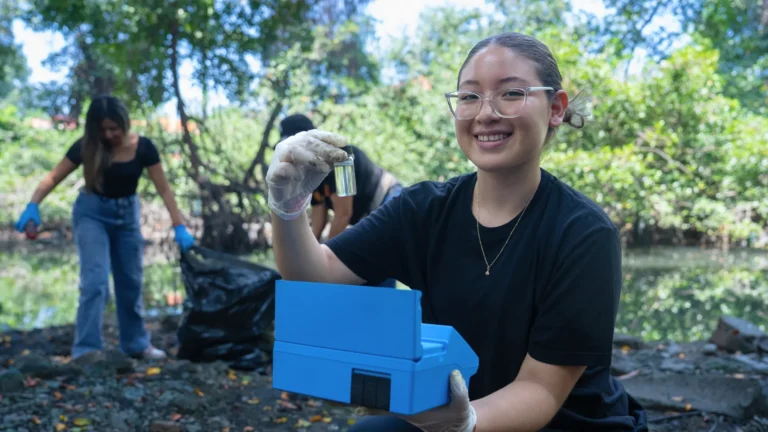
Environmental Engineering
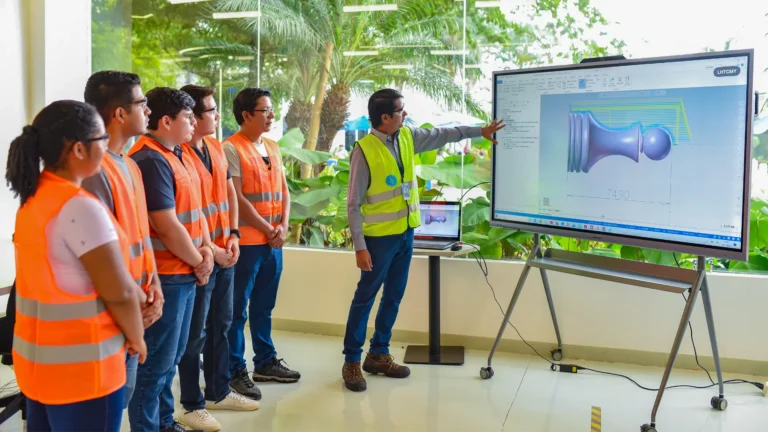
Industrial Engineering

Intelligent Systems Engineering

Mechatronics Engineering
FAQ
Most frequently asked questions about Agronomy
Have another question? An admissions advisor will answer with no obligation.
What does an agronomist do?
They ensure that agricultural production is efficient and sustainable. They assess soils, plan crops, define irrigation and fertilization plans, control pests and diseases, and advise growers and companies. They can also design agricultural projects, research new techniques, or work in quality control of products of plant origin.
How long is the Agronomy program at ECOTEC?
The Agronomy program at ECOTEC University lasts 4 years and is taught in person. The curriculum is organized by semesters, and you can review it in full in the study plan available on this page.
What degree will I earn by studying Agronomy?
When you graduate, you earn the professional degree of Agronomist Engineer. The program is approved by the Council of Higher Education (CES) under resolution RPC-SO-12-No.172-2025, and your degree is registered with SENESCYT, giving it official validity in Ecuador.
Which campus can I study Agronomy at?
Agronomy is offered at the Samborondón Campus (Vía Samborondón, km 13.5). That is where you will attend classes, do your practical training, and receive admissions support.
Do I need a farming background to study Agronomy in Ecuador?
No. Many students arrive with no agricultural experience and gain it during the program through field practice. What helps most is an interest in biology, chemistry, and the environment, and a willingness to work outdoors. If you come from a farming family, that experience will be a plus, not a requirement.
What are the requirements to study Agronomy at ECOTEC?
To begin your admission to Agronomy, you need your ID document (Ecuadorian ID card or passport), your high school academic record or report card, and a recent photograph. An admissions advisor will confirm whether any additional documents are needed and will guide you throughout the process.
What skills do I need to study Agronomy?
It helps to have scientific curiosity, keen observation, and an enjoyment of solving practical problems. You will use biology, chemistry, and applied math, so you need to stay consistent with those subjects. Communication and people skills also matter, because much of the work involves explaining technical recommendations to growers and field teams.
Admissions open
Start your Agronomy degree today
An advisor will guide you through the entire admission, scholarship, and cost process.