




Psychology
Undergraduate program · Bachelor’s Degree in Psychology
Modality
In-person
Duration
4 years
Campus
Samborondón, La Costa
Request information
An admissions advisor will contact you to answer your questions about Psychology.
About the program
Study Psychology at ECOTEC
The Psychology program promotes the comprehensive education of psychologists by integrating science and practice to develop ethical, creative, and innovative interventions in educational, family, organizational, and community settings. The program fosters a professional vision focused on human development, prevention, and the strengthening of psychological well-being.
Degree awarded
Bachelor’s Degree in Psychology
CES Resolution: RPC-SO-06-No.084-2025

Graduate profile
What you will be able to do
When you graduate from Psychology, you will have developed these professional competencies.
Carry out processes of analysis and interpretation of information in diverse contexts, promoting the assessment of data to make well-founded judgments, while maintaining a reflective and respectful approach toward different viewpoints for the purpose of contributing effective solutions to complex problems.
Effectively lead work teams, assuming commitments that contribute to the improvement and development of an organization, promoting collaborative leadership to strengthen cohesion and achieve common objectives, with an ethical and responsible attitude in joint decision-making for conflict resolution.
Generate original ideas in diverse contexts, promoting the association of concepts and the identification of relationships among factors to address challenges innovatively, while maintaining an open and flexible attitude toward change with a critical approach to implementing original and creative solutions.
Develop a logical and structured sequence of research processes autonomously and creatively to generate new knowledge and apply and strengthen existing knowledge, collecting and analyzing data clearly and coherently, while maintaining a critical and ethical approach throughout all stages of the research process.
Identify community environments by detecting patterns, needs, and social issues in order to design proposals that promote the well-being of communities in vulnerable contexts, demonstrating social sensitivity and respect for diversity.
Design psychological intervention strategies from a community-based approach to address community needs and problems, considering the socio-emotional dynamics and factors that influence well-being, and promoting collective mental health and social value with professionalism and ethical commitment.
Evaluate individual and collective problems, interpreting assessment results with solid training and psychological judgment in order to develop effective proposals that promote patient growth and recovery, ensuring impartiality, continuous improvement, and integrity in accordance with professional standards and procedures.
Implement intervention and research processes autonomously and creatively, incorporating new technologies clearly and coherently to generate new knowledge and strengthen existing knowledge, while maintaining a critical, ethical, and scientifically rigorous approach throughout all stages of the process.
Career opportunities
Where do Psychology professionals work?
A psychologist studies behavior and mental processes to promote the well-being of individuals, groups, and communities. The Psychology program in Ecuador prepares you to work in educational institutions, companies, foundations, and community projects, in Guayaquil and other cities in the country, carrying out assessment, counseling, prevention, and research.
Educational Psychology
Supports students, teachers, and families in learning processes, career guidance, school coexistence, and early detection of difficulties in elementary and high schools.
Organizational Psychology
Takes part in personnel selection, performance evaluation, workplace climate, and employee well-being in human talent departments or consulting firms.
Community Psychology
Identifies social needs and problems and designs interventions that strengthen the well-being of vulnerable communities.
Family and Counseling
Works with families on issues of coexistence, parenting, and conflict resolution in foundations, protection programs, and social services.
Psychological Assessment
Administers and interprets tests and instruments to assess individual and collective problems, and proposes intervention plans based on the results.
Research
Designs and conducts studies on behavior and well-being, uses new technologies to collect data, and provides evidence for social programs and policies.
Study plan
Curriculum and brochure
Download the complete study plan and program information in PDF.
Admissions
Admission requirements
Have these documents ready for your admission process. Your advisor will confirm whether your program requires any additional documents.

ID document
Color copy of your national ID card, or passport if you are an international student.

Academic record
Copy of your high school report card or academic record.

Current photo
Recent color digital photo with a light background.
Where to study
Campuses where Psychology is offered
Why ECOTEC
Why study Psychology at ECOTEC?
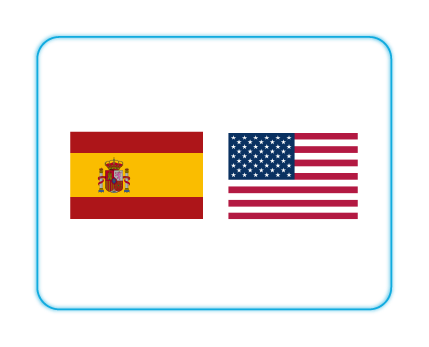
Degree recognized in Spain and the U.S.
Your undergraduate degree is recognized in Spain and the United States (conditions apply depending on the program).




International certifications
Complement your degree with certifications from Meta, Google, Microsoft, and IBM.


Recognized quality
ECOTEC is part of the QS World University Rankings and the Times Higher Education Latin America Rankings.



Three campuses
Study in Samborondón, Guayaquil, or La Costa, with modern classrooms, laboratories, and green areas.
Keep exploring
Other programs in the School of Communication, Humanities, and Creativity
Compare study plans and find the program that suits you best.

Communication

Content Creation and Audience Management

Marketing

Multimedia and Audiovisual Production
FAQ
Most frequently asked questions about Psychology
Have another question? An admissions advisor will answer with no obligation.
What is the difference between Psychology and Clinical Psychology?
Psychology offers a broad education, geared toward intervention in educational, family, organizational, and community settings, with an emphasis on prevention and human development. Clinical Psychology focuses on mental health: assessment, diagnosis, psychotherapy, and rehabilitation of disorders. If you are interested in working with groups, schools, or companies, the Psychology program in Ecuador opens that path for you.
How long is the Psychology program at ECOTEC?
The Psychology program at ECOTEC University lasts 4 years and is taught in person. The curriculum is organized by semesters, and you can review it in full in the study plan available on this page.
What degree will I earn by studying Psychology?
When you graduate, you earn a Bachelor's degree in Psychology. The program is approved by the Council of Higher Education (CES) under resolution RPC-SO-06-No.084-2025, and your degree is registered with SENESCYT, giving it official validity in Ecuador.
Which campus can I study Psychology at?
You can study Psychology at the Samborondón Campus (Vía Samborondón, km 13.5) or the La Costa Campus (Vía a la Costa, km 16.5). Choose the campus closest to you: the curriculum is the same at each one.
What skills do I need to study Psychology?
The foundation is being a good listener, empathy, and respect for different points of view. You also need analytical skills to interpret behaviors and assessment results, good oral and written expression, and emotional balance to handle difficult stories without losing objectivity. A genuine interest in understanding why people act the way they do is your best starting point.
What are the requirements to study Psychology at ECOTEC?
To begin your admission to Psychology, you need your ID document (Ecuadorian ID card or passport), your high school academic record or report card, and a recent photograph. An admissions advisor will confirm whether any additional documents are needed and will guide you throughout the process.
Is there a lot of math in Psychology?
Not in the sense of advanced calculus, but it does include statistics. You need it to design research, analyze data, and understand how psychological tests are built and validated. With the math foundation from high school and a willingness to learn analytical tools, you can progress without any problem. More than mastering formulas, what matters is interpreting correctly what the data says.
Admissions open
Start your Psychology degree today
An advisor will guide you through the entire admission, scholarship, and cost process.