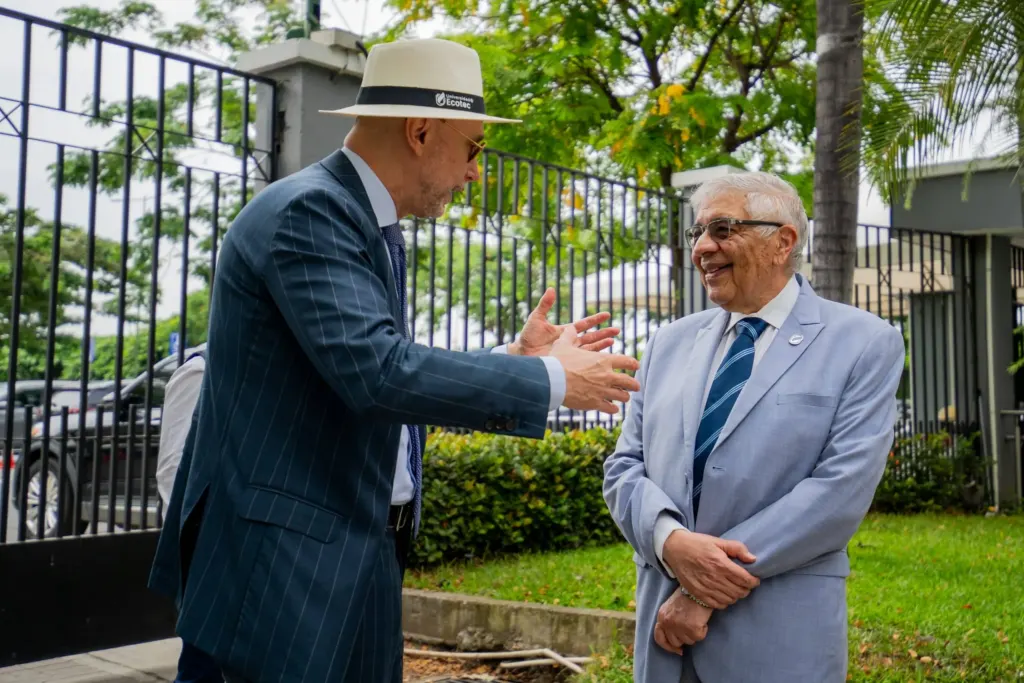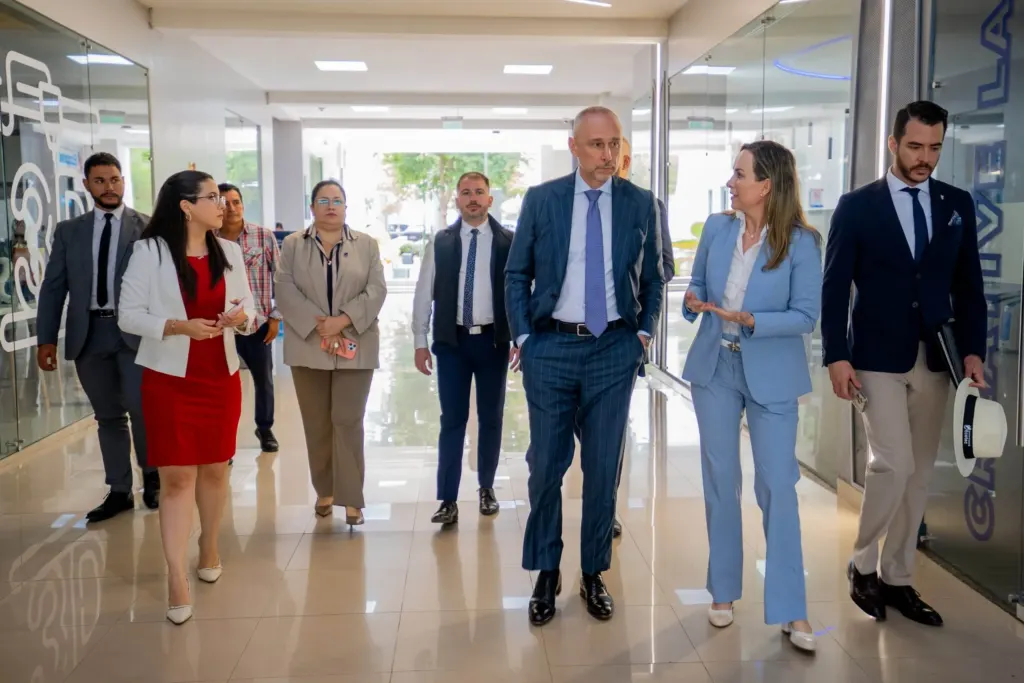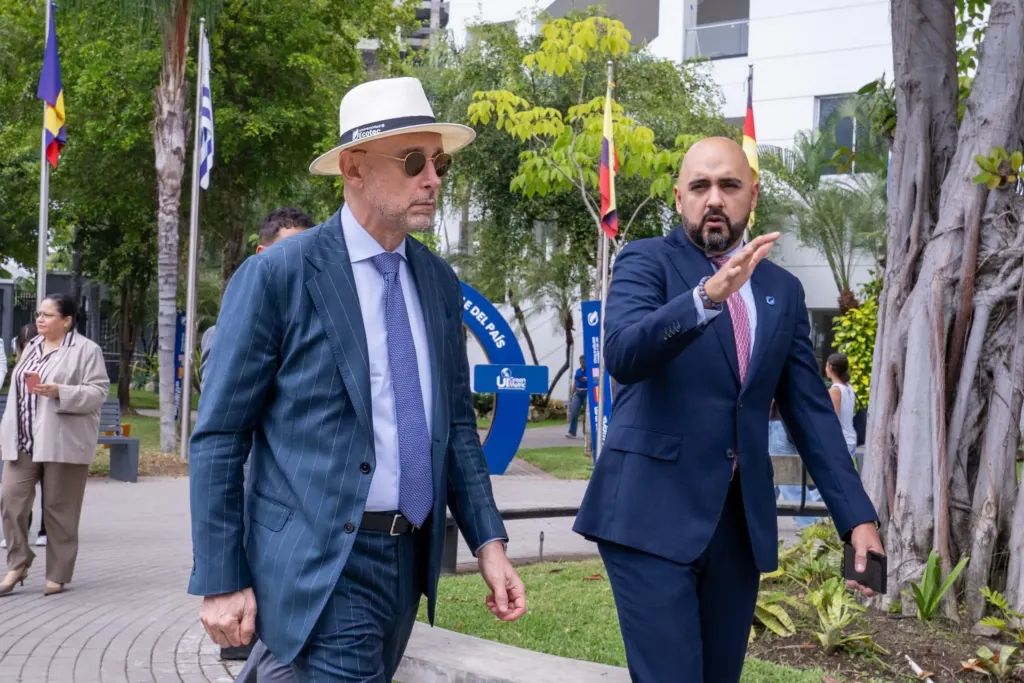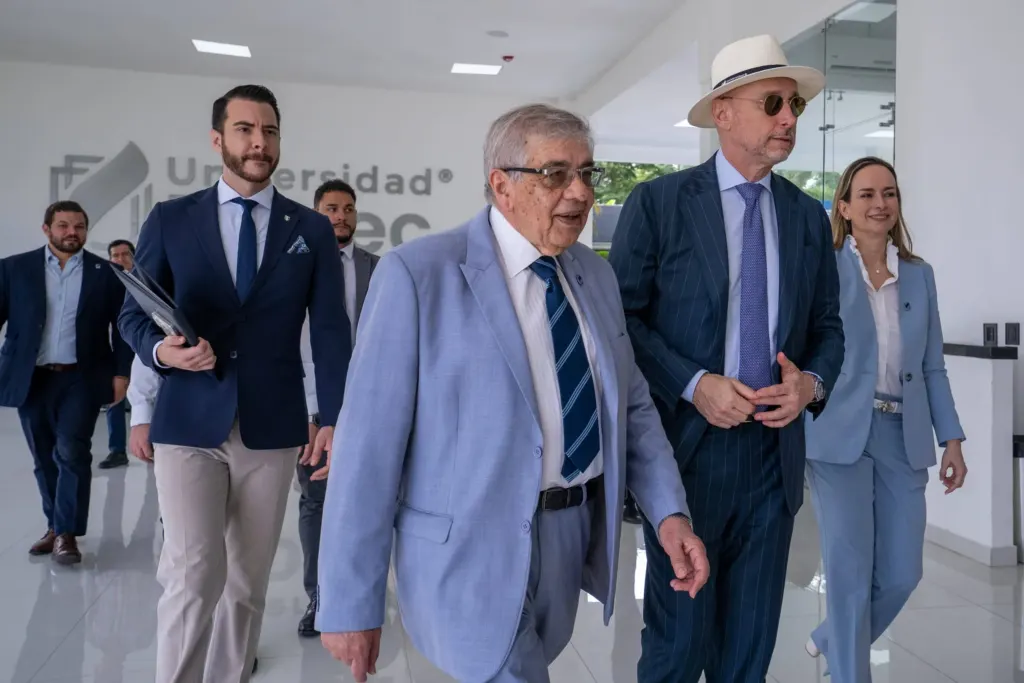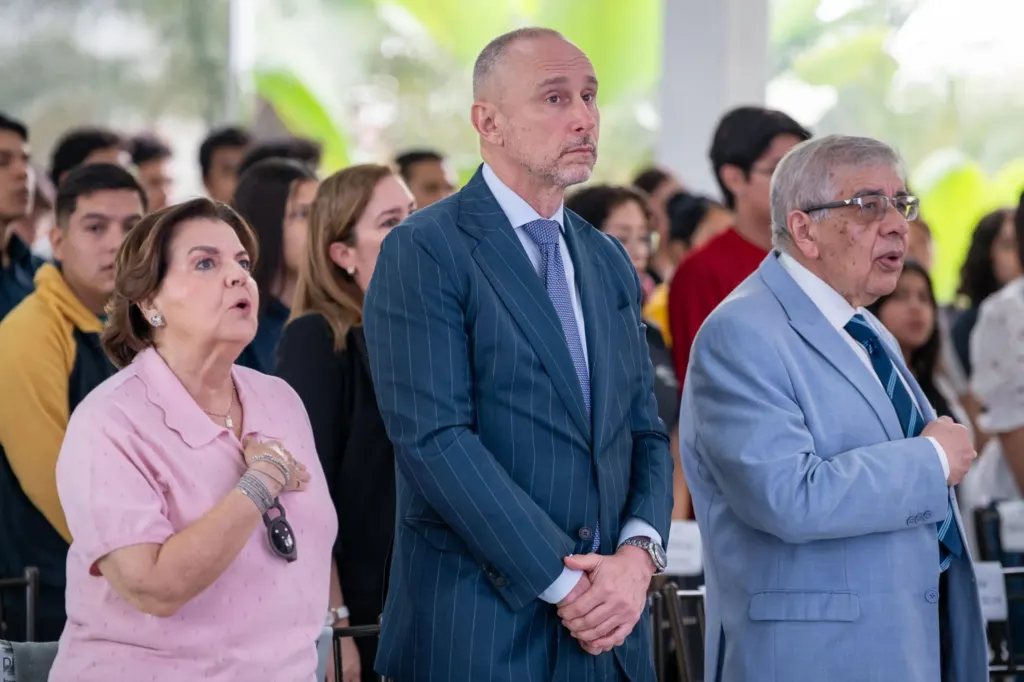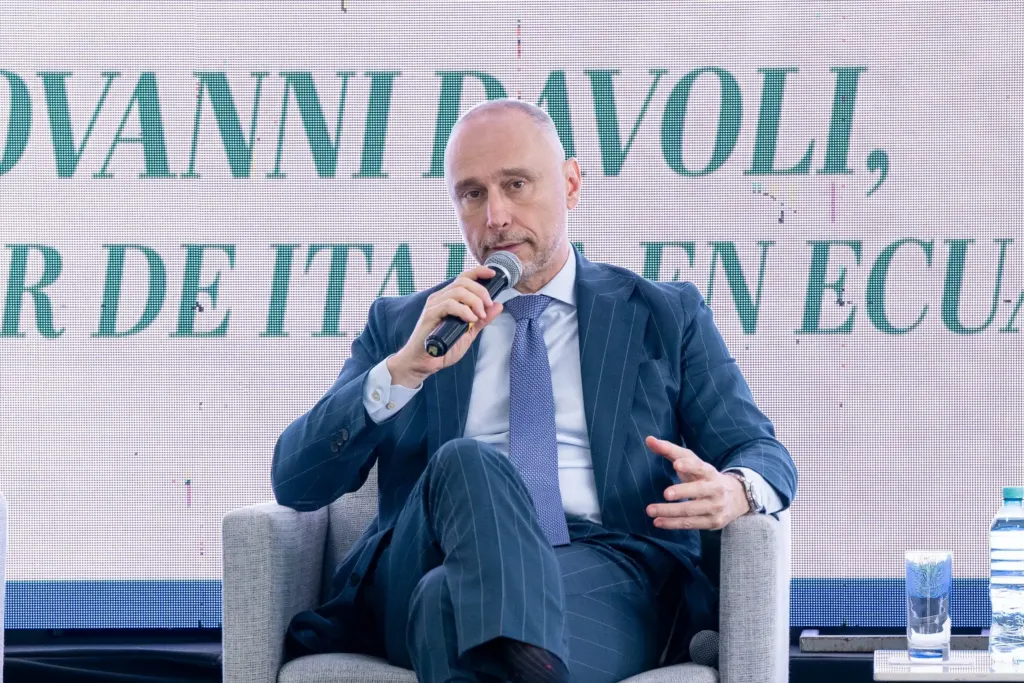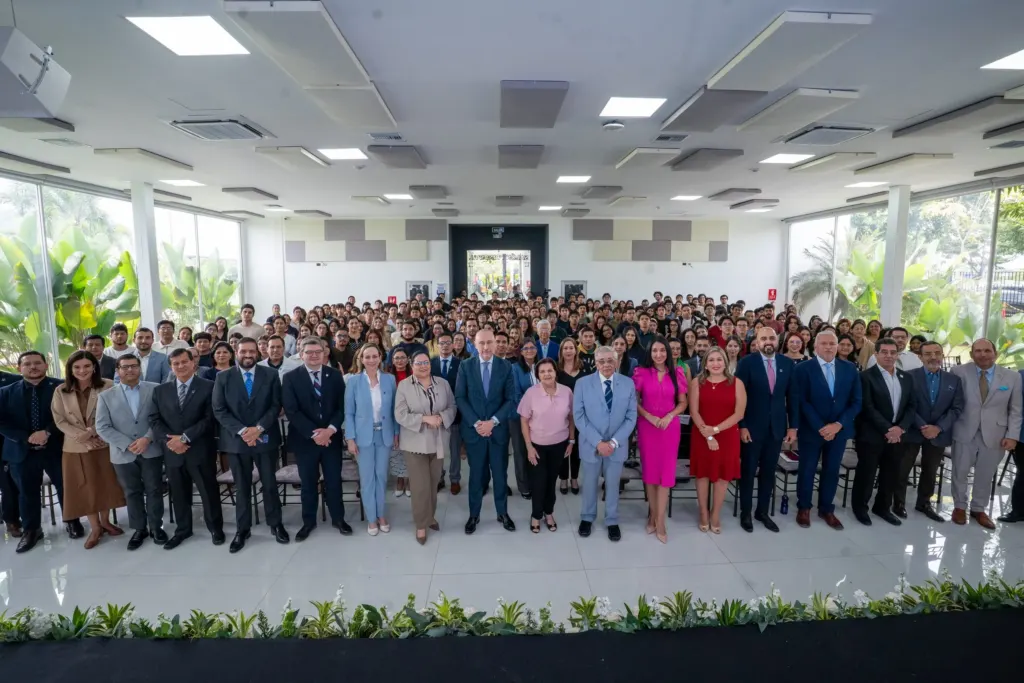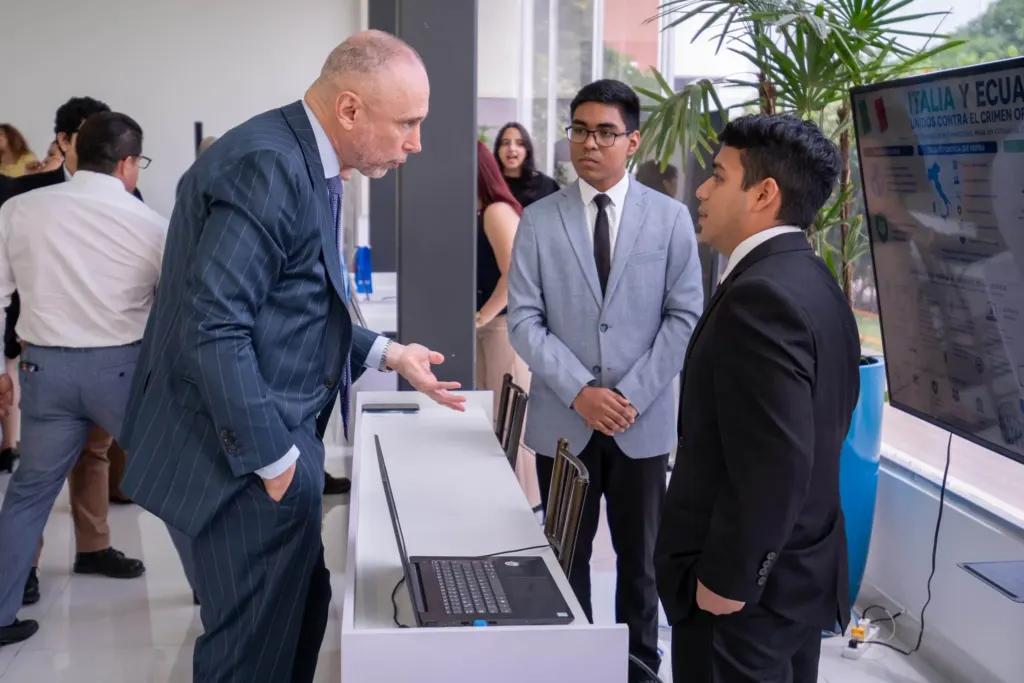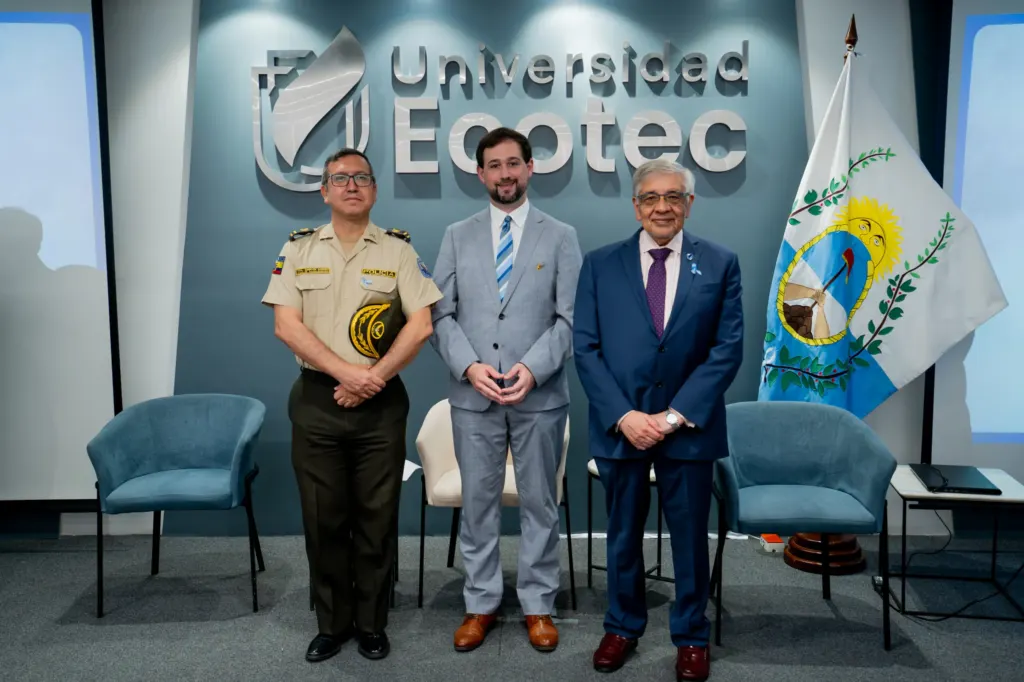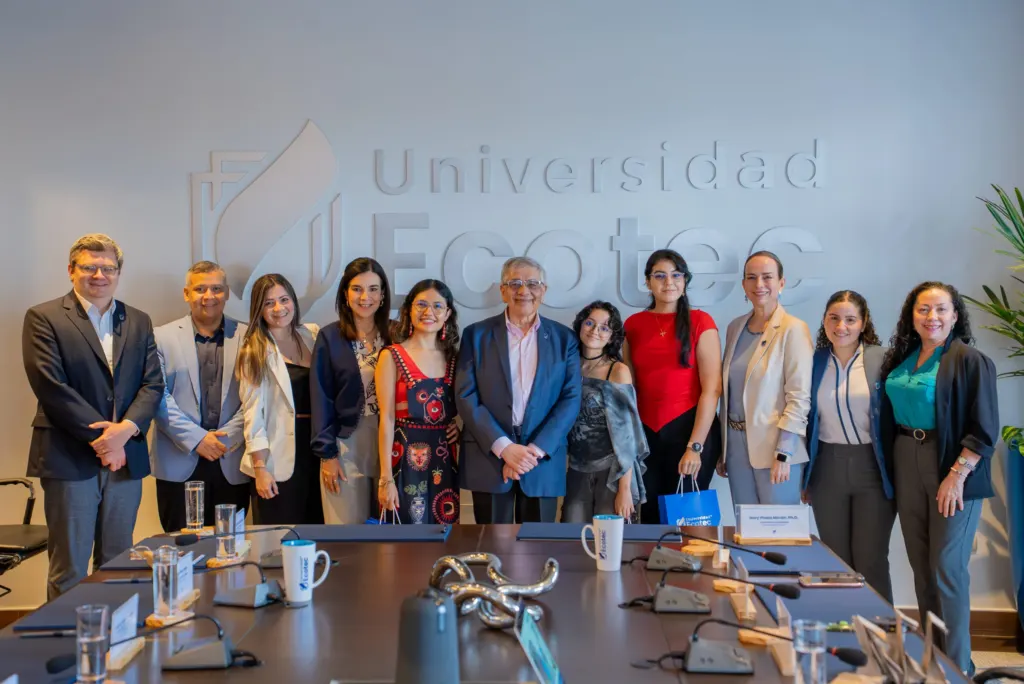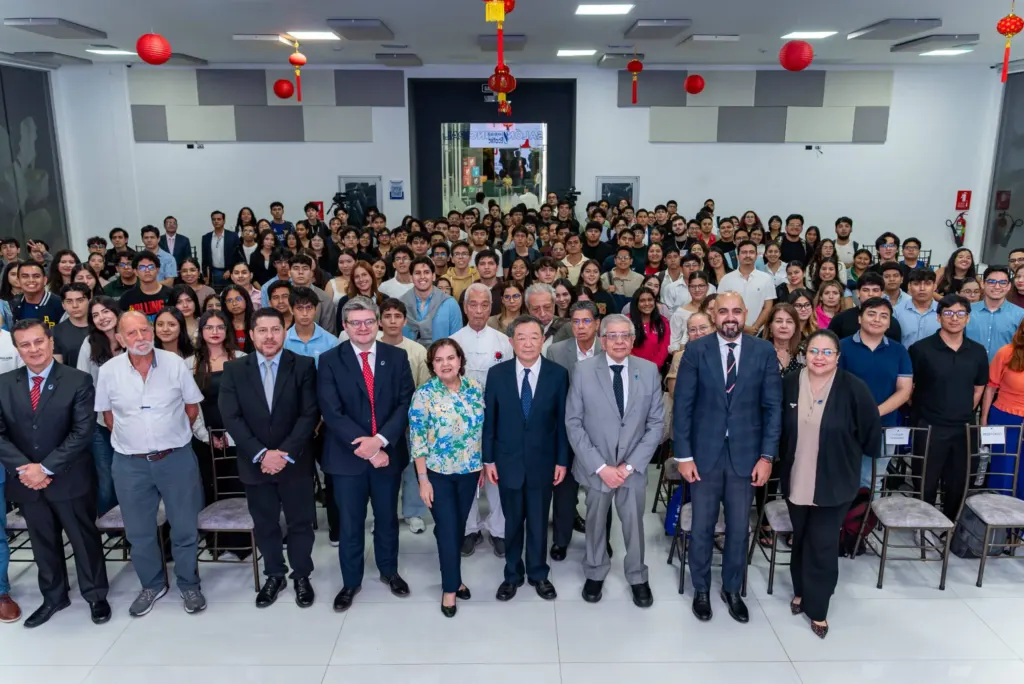



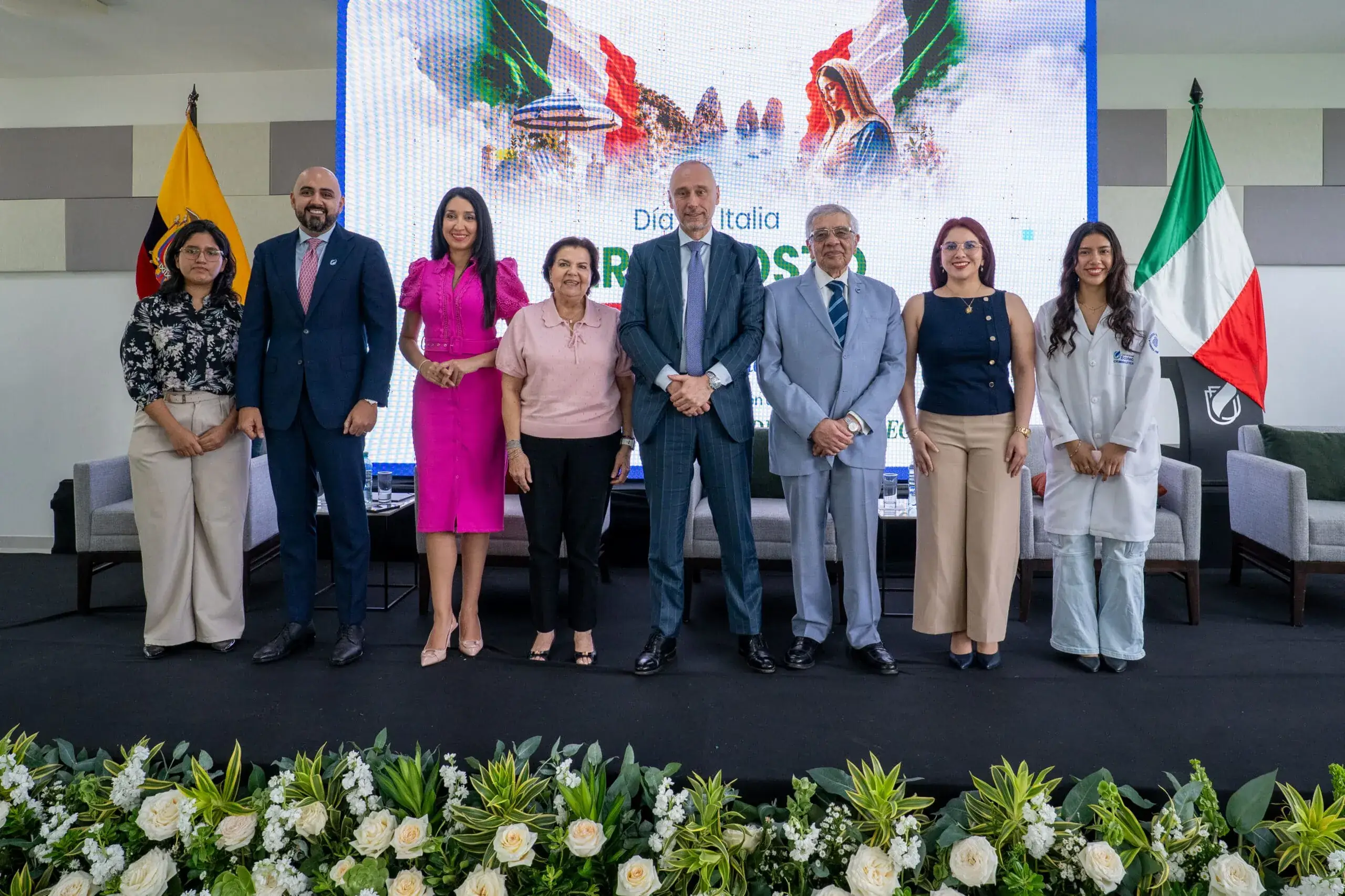
We are celebrating our 20 years as an institution by creating spaces that connect our university community with new cultures, perspectives and learning opportunities. As part of Ferragosto, we welcomed the Ambassador of Italy to Ecuador, Giovanni Davoli, and led a campus tour of our Samborondón facilities, as part of a day that strengthened ties between Italy and Ecuador through academia.
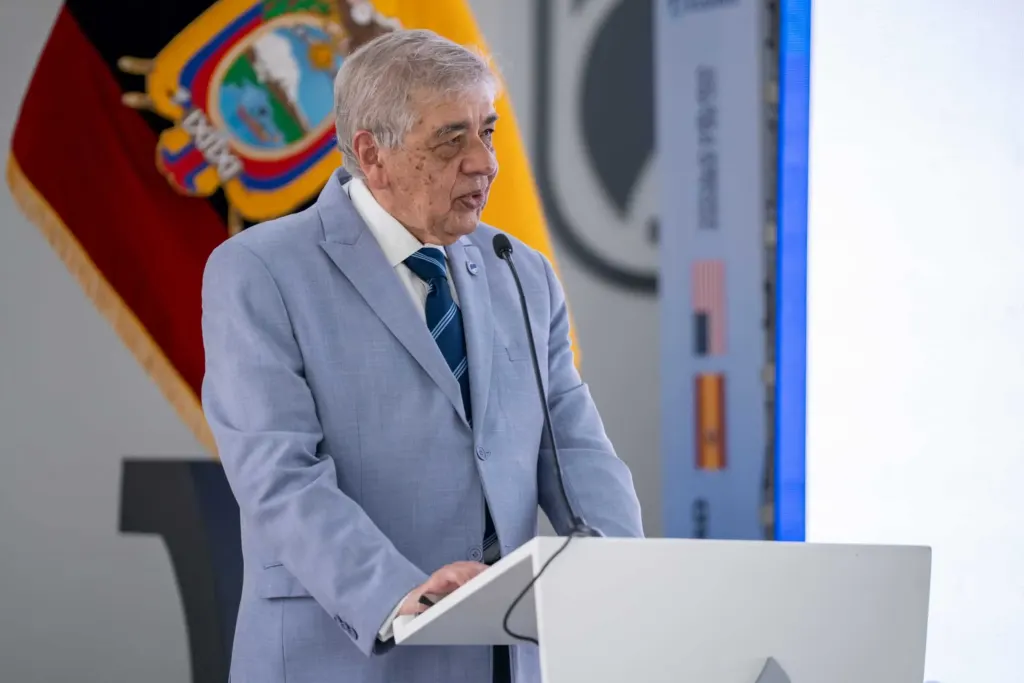
The panel discussion was offered by our president, Dr. Joaquín Hernández Alvarado, as part of our vision of promoting an education that goes beyond the classroom and brings our students closer to other cultures and realities. With this approach, the Networking Center hosted the panel discussion “Italy and Ecuador: Past and Present,” a gathering that put into perspective the relationship between the two countries and its cultural, social and economic transformation over time.
The event featured Giovanni Davoli, Ambassador of Italy to Ecuador, alongside our authorities: Dr. Leticia de Moral, President of the Board of Regents; Dr. Joaquín Hernández Alvarado, President of ECOTEC; and Vicente Andrés Taiano, M.A., Director of the Guayaquil and La Costa campuses. We were also joined by representatives of the Ministry of Foreign Affairs, the Italy Committee, the Italian Chamber and the Ecuadorian-Italian Binational Chamber, as well as special guests and members of our university community.
Our president, Dr. Joaquín Hernández Alvarado, noted that gatherings like this allow our students to engage with other cultures and better understand the complexity of today’s world. In this regard, he underscored the importance of internationalization as one of the pillars of contemporary university education. “We encourage you, the students, to get to know other countries and their cultures, and to take part in academic missions that allow us to achieve this goal,” he said.
Ferragosto with the Ambassador of Italy: ties with Ecuador
During the event, Ambassador Giovanni Davoli highlighted the closeness between the two nations and noted that Ecuador is Italy’s main economic partner in the Andean region. He also pointed to the Ecuadorian community in Italy, made up of some 100,000 people, which he described as hardworking, upright and honest, highlighting its ability to integrate into the social, economic and cultural fabric of the European country.
“For some reason, Italians and Ecuadorians understand each other very well,” said the ambassador, who also highlighted shared values such as the importance of family. Added to this is a trade relationship that keeps growing stronger: Ecuador has established itself as a major supplier of organic products to the European market.
The relationship between the two cultures can also be seen in the streets of Guayaquil. The Italian presence is part of the city’s architectural and business heritage, with landmark works and buildings that reflect the Italian community’s influence on urban development, among them spaces linked to the former El Telégrafo newspaper building.
ECOTEC students took part in the panel discussion and had the opportunity to learn firsthand about historical, cultural, social and economic aspects of the relationship between Italy and Ecuador. In this way, we strengthen our commitment to a well-rounded education that makes intercultural dialogue part of the learning process.
What is Ferragosto?
Ferragosto, celebrated every August 15, has its roots in ancient Rome and is one of the most important moments of the Italian summer, traditionally associated with rest and vacation. At ECOTEC, this celebration became an opportunity to bring our university community closer to Italian culture while reflecting on the ties that bind the two countries.
The gathering “Italy and Ecuador: Past and Present” thus reaffirmed that internationalization is also built by exploring new cultures and realities, leading spaces for dialogue and exchange, and transforming that knowledge into new learning opportunities.