




Educational model · General education
ECOTEC curriculum
University education goes beyond technical training. Our purpose is to develop well-rounded professionals with critical thinking, ethical sensitivity, research skills, and global citizenship awareness.
Educational hallmark
What every graduate of ECOTEC shares
The general education curriculum ensures that all our graduates, regardless of their program or study mode, develop the cross-cutting competencies that define the institution's educational hallmark.
All undergraduate programs
On-campus, hybrid, and online
30 semester credits
7 common courses
4 cross-cutting competencies
First component
Foundational core
Seven required courses for all undergraduate students, selected based on the educational model and the four cross-cutting competencies of ECOTEC. They ensure a common foundation with exposure to the three major areas of knowledge.
01
Humanities / Fine Arts
Language Skills
02
Humanities / Fine Arts
Ethics
03
Natural Sciences / Mathematics
Research Methodology / Virtual Environments and Learning Strategies*
04
Natural Sciences / Mathematics
Sustainable Development
05
Social and Behavioral Sciences
National Reality and Politics in Today's World
06
Natural Sciences / Mathematics
Data-Driven Decisions and Artificial Intelligence
07
Social and Behavioral Sciences
Entrepreneurship
Second component
Core by area of knowledge
It complements the foundational core with at least 9 credits integrated into each program's curriculum. Choose an area to see the courses for each program.
Area 1 - Economics and Business Sciences
| Carrera | Asignaturas del Núcleo por Área |
|---|---|
| Administración de Empresas (presencial, en línea) | Análisis Estadístico · Matemáticas Financieras · Fundamentos de Administración |
| Contabilidad y Auditoría (presencial, en línea) | Análisis Estadístico · Matemáticas Financieras · Fundamentos de Administración |
| Economía (presencial, en línea) | Análisis Estadístico · Matemáticas Financieras · Fundamentos de Administración |
| Finanzas (presencial) | Análisis Estadístico · Matemáticas Financieras · Fundamentos de Administración |
| Gestión del Talento Humano (presencial, en línea) | Análisis Estadístico · Matemáticas Financieras · Fundamentos de Administración |
| Negocios Digitales (presencial) | Análisis Estadístico · Matemáticas Financieras · Fundamentos de Administración |
| Negocios Internacionales (híbrida, en línea) | Análisis Estadístico · Matemáticas Financieras · Fundamentos de Administración |
| Marketing (presencial, en línea) | Análisis Estadístico · Análisis Matemático* · Fundamentos de Administración |
| Relaciones Internacionales (en línea) | Análisis Estadístico · Macroeconomía* · Fundamentos de Administración |
Area 2 - Communication, Humanities, and Creativity
| Carrera | Asignaturas del Núcleo por Área |
|---|---|
| Comunicación (presencial) | Diseño Gráfico II · Composición Visual · Diseño Gráfico I |
| Creación de Contenidos y Gestión de Audiencias (presencial) | Diseño Gráfico II · Composición Visual · Diseño Gráfico I |
| Multimedia y Producción Audiovisual (presencial) | Diseño Gráfico II · Composición Visual · Diseño Gráfico I |
| Periodismo (presencial) | Diseño Gráfico II · Composición Visual · Diseño Gráfico I |
| Diseño Gráfico Interactivo (en línea) | Diseño Gráfico II · Teoría de la Imagen* · Diseño Gráfico I |
Area 3 - Behavioral Sciences
| Carrera | Asignaturas del Núcleo por Área |
|---|---|
| Psicología (presencial, en línea) | Psicología General · Análisis Estadístico · Psicología Social y Comunitaria |
| Psicología Clínica (presencial) | Corrientes Psicológicas* · Bioestadística* · Psicología Social y de la Salud* |
Area 4 - Health Sciences
| Carrera | Asignaturas del Núcleo por Área |
|---|---|
| Medicina (presencial) | Bioestadística · Epidemiología · Bioquímica · Fisiopatología |
| Enfermería (presencial) | Bioestadística · Epidemiología · Bioquímica · Fisiopatología |
| Fisioterapia (presencial) | Bioestadística · Epidemiología · Bases Químico-biológicas de la Célula* · Fisiopatología |
| Nutrición y Dietética (presencial) | Bioestadística · Epidemiología · Bioquímica · Fisiopatología |
Area 5 - Engineering and Applied Sciences
| Carrera | Asignaturas del Núcleo por Área |
|---|---|
| Ingeniería Civil (presencial) | Estadística · Física del Movimiento · Cálculo Diferencial · Cálculo Integral y Matricial |
| Ingeniería Industrial (presencial) | Estadística · Física del Movimiento · Cálculo Diferencial · Cálculo Integral y Matricial |
| Ingeniería Química (presencial) | Estadística · Física del Movimiento · Cálculo Diferencial · Cálculo Integral y Matricial |
| Mecatrónica (presencial) | Estadística · Física del Movimiento · Cálculo Diferencial · Cálculo Integral y Matricial |
| Ingeniería Ambiental (presencial) | Estadística · Física del Movimiento · Cálculo Diferencial · Cálculo Integral y Matricial |
| Sistemas Inteligentes (presencial, en línea) | Estadística · Física del Movimiento · Cálculo Diferencial / Cálculo I* · Cálculo Integral y Matricial |
| Logística y Transporte (presencial) | Estadística · Física del Movimiento · Cálculo Diferencial · Cálculo Integral y Matricial |
| Agronomía (presencial) | Estadística · Física del Movimiento · Cálculo Diferencial · Cálculo Integral y Matricial |
| Criminalística (presencial) | Estadística · Física del Movimiento · Cálculo Diferencial · Física de la Energía* |
Area 6 - Legal Sciences
| Carrera | Asignaturas del Núcleo por Área |
|---|---|
| Derecho (presencial, en línea) | Historia y Filosofía del Derecho · Estado y Constitución · Derecho Internacional |
Area 7 - Architecture
| Carrera | Asignaturas del Núcleo por Área |
|---|---|
| Arquitectura (presencial) | Trigonometría y Geometría · Topografía y Fotogrametría · Gerencia y Administración de Proyectos · Responsabilidad Social y Empresarial |
Area 8 - Natural Sciences
| Carrera | Asignaturas del Núcleo por Área |
|---|---|
| Medicina Veterinaria (presencial) | Bioquímica · Ofimática y Bioestadística · Epidemiología y Salud Pública |
Area 9 - Education Sciences
| Carrera | Asignaturas del Núcleo por Área |
|---|---|
| Educación (en línea) | Psicología General · Análisis Estadístico · Sociología de la Educación |
Area 10 - Social Work
| Carrera | Asignaturas del Núcleo por Área |
|---|---|
| Trabajo Social (en línea) | Psicología General · Análisis Estadístico · Psicosociología |
Courses marked with an asterisk correspond to documented internal equivalencies, in accordance with ECOTEC's DIE-PRO-015 Course Equivalency and Recognition procedure.
Institutional philosophy
Learn more about ECOTEC
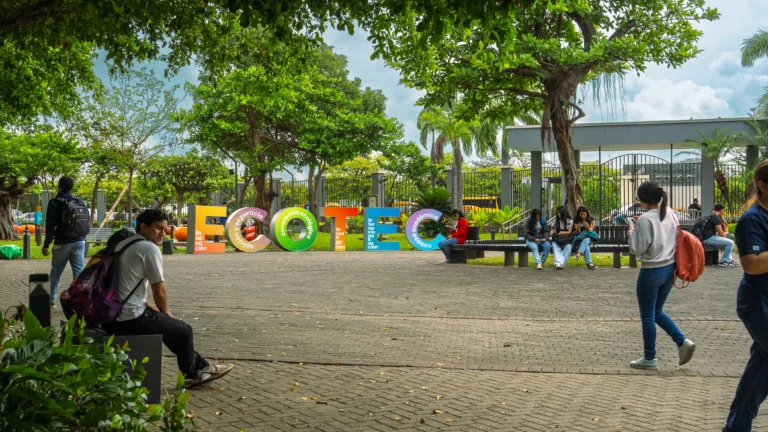
Mission and vision
Who we are, where we are headed, and the values that guide us.
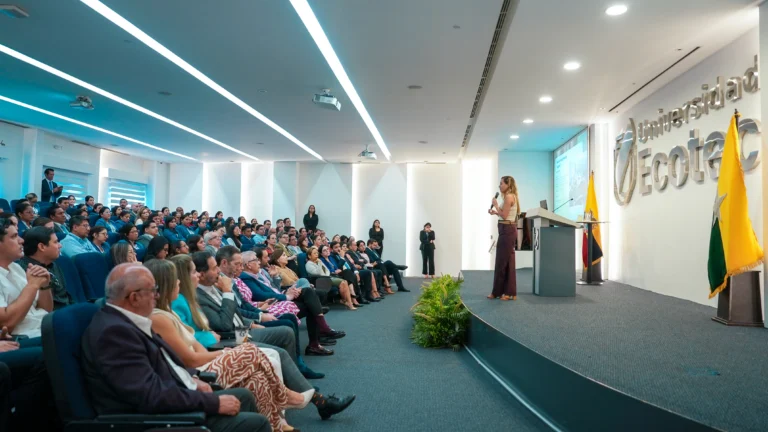
Institutional policies
The guidelines that govern our academic and institutional management.

Regulations and protocols
Search and download regulations, protocols, instructions, and manuals.

Data protection
Your rights as a data subject and how we protect your information.